
Community Water Management: Building Collective Systems for Sustainable and Efficient Water Use
Water challenges in agriculture are rarely confined to a single farm. In many regions, multiple farmers depend on the same sources- whether it is groundwater, canals, or shared surface storage. When water is managed individually without coordination, it often leads to overuse, uneven distribution, and long-term depletion of resources.
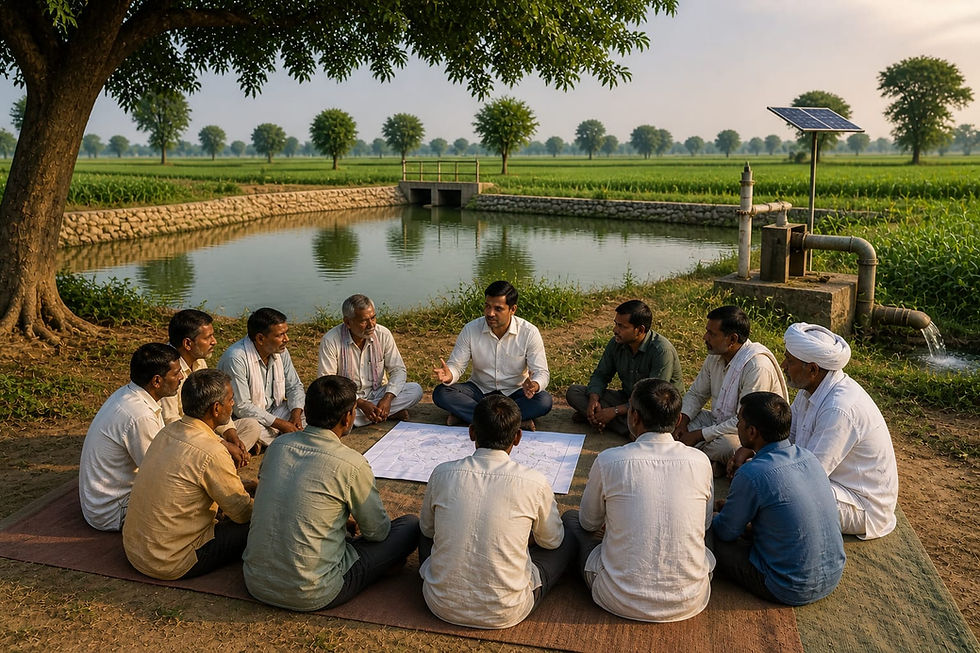
This is where community water management becomes important. Instead of isolated decisions, it focuses on collective planning, shared responsibility, and efficient use of available water. By working together, farmers can improve storage, regulate usage, and ensure fair distribution across fields.
This approach not only helps in managing scarcity but also builds resilience against unpredictable rainfall and climate variability. Community-based systems allow better alignment between water availability and crop planning, reducing risk and improving overall farm productivity.
In a scenario where water resources are under increasing pressure, shifting from individual control to collective management is not just beneficial, it is becoming essential for sustainable agriculture.
Looking to improve water management beyond individual farms?
Connect with us on Whatsapp if your area is facing water scarcity, uneven distribution, or declining groundwater levels, practical community-level solutions can make a significant difference.
1. Why Individual Efforts Are Not Enough
In many farming regions, water is managed at the individual farm level. Farmers make their own decisions regarding irrigation, storage, and extraction. While this may work in the short term, it often creates long-term problems such as over-extraction of groundwater, unequal distribution, and declining availability.
Water is not limited to farm boundaries. It is a shared resource, and its sustainability depends on how it is used collectively. This is where community water management becomes essential.
2. Understanding Community Water Management
Community water management is an approach where a group of farmers or an entire village works together to plan, use, and conserve water resources. Instead of isolated decisions, it focuses on shared responsibility and coordinated action.
This includes planning how water is stored, how it is distributed, and how much is used by each farmer. The aim is to improve efficiency while ensuring fair access for everyone.
3. The System Perspective
Water management at the community level is not just about irrigation. It involves managing the entire system, including:
• Surface water storage
• Groundwater recharge
• Distribution and usage
When these elements are managed together, water becomes more available and reliable.
4. Key Components of Community Water Management
4.1. Shared Water Resources
These include ponds, check dams, canals, and common wells. Managing these resources collectively ensures better availability and reduces misuse.
4.2. Collective Decision-Making
Communities decide when and how water will be used. This reduces conflicts and improves efficiency.
4.3. Rules and Responsibilities
Clear guidelines are set for water usage, allocation, and maintenance. These rules ensure sustainability.
4.4. Maintenance Systems
Regular cleaning and repair of water structures is essential to keep the system functional.
How It Works on the Ground
Step 1: Resource Mapping
Identify available water sources such as rainfall, ponds, and groundwater levels.
Step 2: Planning
Decide crop patterns, irrigation schedules, and water allocation based on availability.
Step 3: Implementation
Use shared systems like storage structures and irrigation channels to distribute water efficiently.
Step 4: Monitoring
Continuously observe water usage and make adjustments based on conditions.
5. Benefits of Community Water Management
• Efficient use of water resources
• Reduced groundwater depletion
• Fair distribution among farmers
• Better crop planning
• Increased resilience during drought
Challenges to Consider
• Lack of coordination among farmers
• Conflicts over usage
• Weak implementation of rules
• Need for awareness and participation
Addressing these challenges requires strong communication and trust within the community.
6. Role of Climate Variability
Changing rainfall patterns are increasing uncertainty in water availability.
Community systems help manage this by:
• Storing excess rainfall
• Sharing resources during scarcity
• Planning collectively
This makes farming systems more resilient.
7. Integrating Traditional and Modern Approaches
The most effective systems combine:
• Traditional knowledge (ponds, bunding)
• Modern technology (drip irrigation, monitoring tools)
This hybrid approach improves both efficiency and sustainability.
8. Strengthening Community Participation
For community water management to succeed, participation is essential.
Farmers need to:
• Be involved in planning
• Follow agreed rules
• Contribute to maintenance
Strong participation ensures long-term success.
Making It Work on the Ground
For many regions, the challenge is not the concept- but implementation.
A practical approach includes:
• Starting with small groups
• Building trust gradually
• Creating simple rules
• Expanding over time
Agri Joy supports such initiatives by helping farmers adopt structured and practical water management systems that are easy to implement at the community level.
Final Thoughts
Community water management is not just about conserving water. It is about using it wisely and fairly. By working together, farmers can improve availability, reduce risk, and ensure long-term sustainability.
In the future, where water resources are becoming limited, collective management will play a crucial role in successful farming.
Common Farmer Questions (FAQs)
1. What is community water management?
> It is the collective planning and use of water resources by farmers.
2. Does it require high investment?
> Not always. Many practices use existing resources more efficiently.
3. What is the main benefit?
> Better water availability and fair distribution.
4. Can it work in small villages?
> Yes, it is often more effective in smaller communities.
Want to improve water management in your area?
Explore practical solutions and start building a more efficient system for your farm and community. Fill Out the Form for customized recommendations.
Visit agrijoy.in for more such updates.
Ready to embark on your hydroponic journey? Start today with Agri Joy—your partner in sustainable, Joyful farming


Comments